
Q4 2025 DIGITAL TRUST INDEX

The Rising Impact of Chargebacks and Consumer Disputes

Powered by FIBR, the Fraud Industry Benchmarking Resource

the-rising-impact-of-chargebacks-and-consumer-disputes

See the Full Report

Thank you, we will be in contact soon.

The Consumer Experience with Disputes

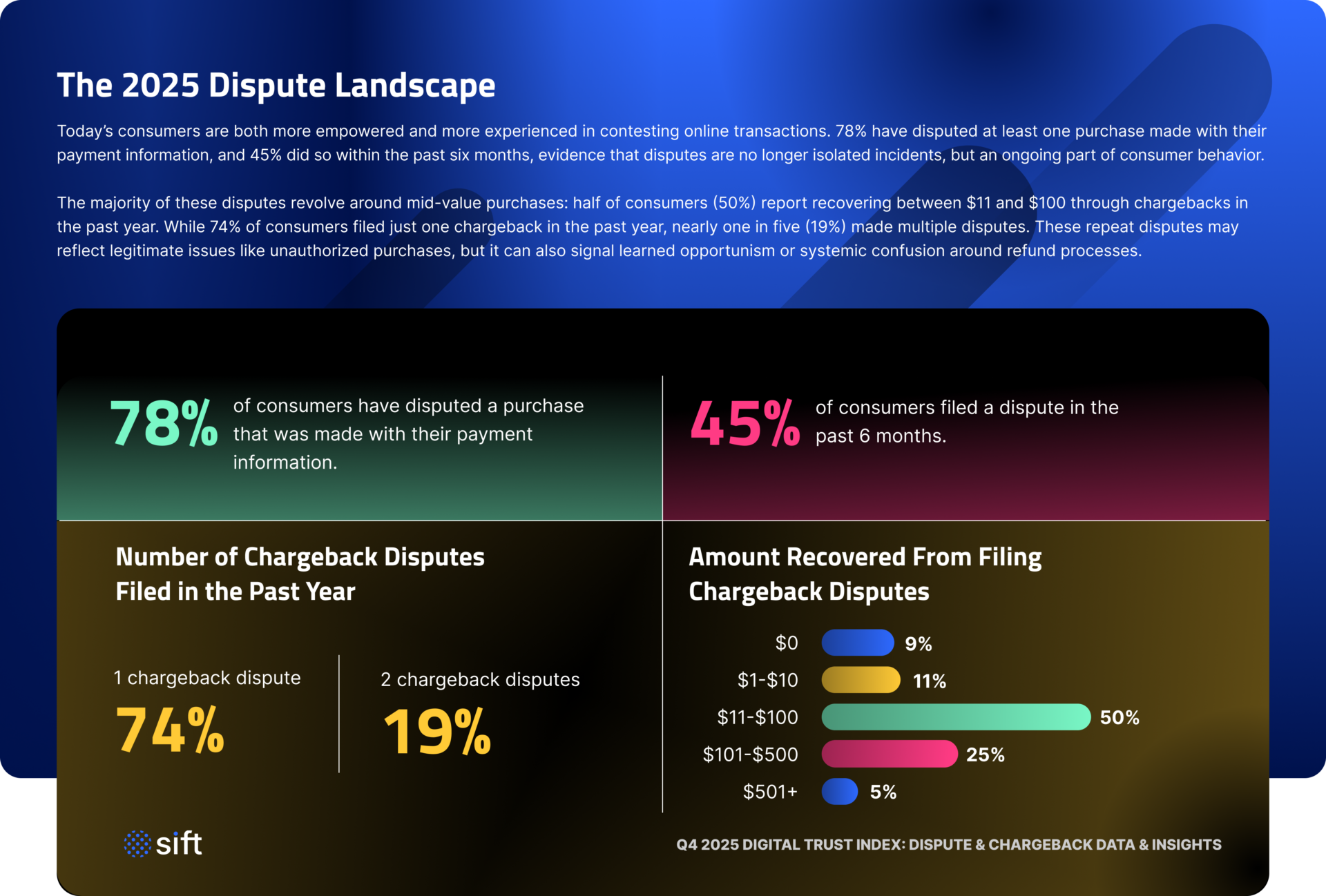
As commerce continues to move online, consumer disputes have become an unavoidable part of doing business. What began as a mechanism for resolving legitimate issues has evolved into a complex ecosystem, mixing valid chargebacks, fulfillment frustrations, and opportunistic misuse. Sift’s consumer survey* reveals how shifting economic pressures, heightened expectations, and the viral spread of “refund hacks” are reshaping how and why consumers challenge transactions.

the-consumer-experience-with-disputes_img
background_blue_with_yellow_boreder
2025-dispute-landscape

Why Consumers Dispute Transactions

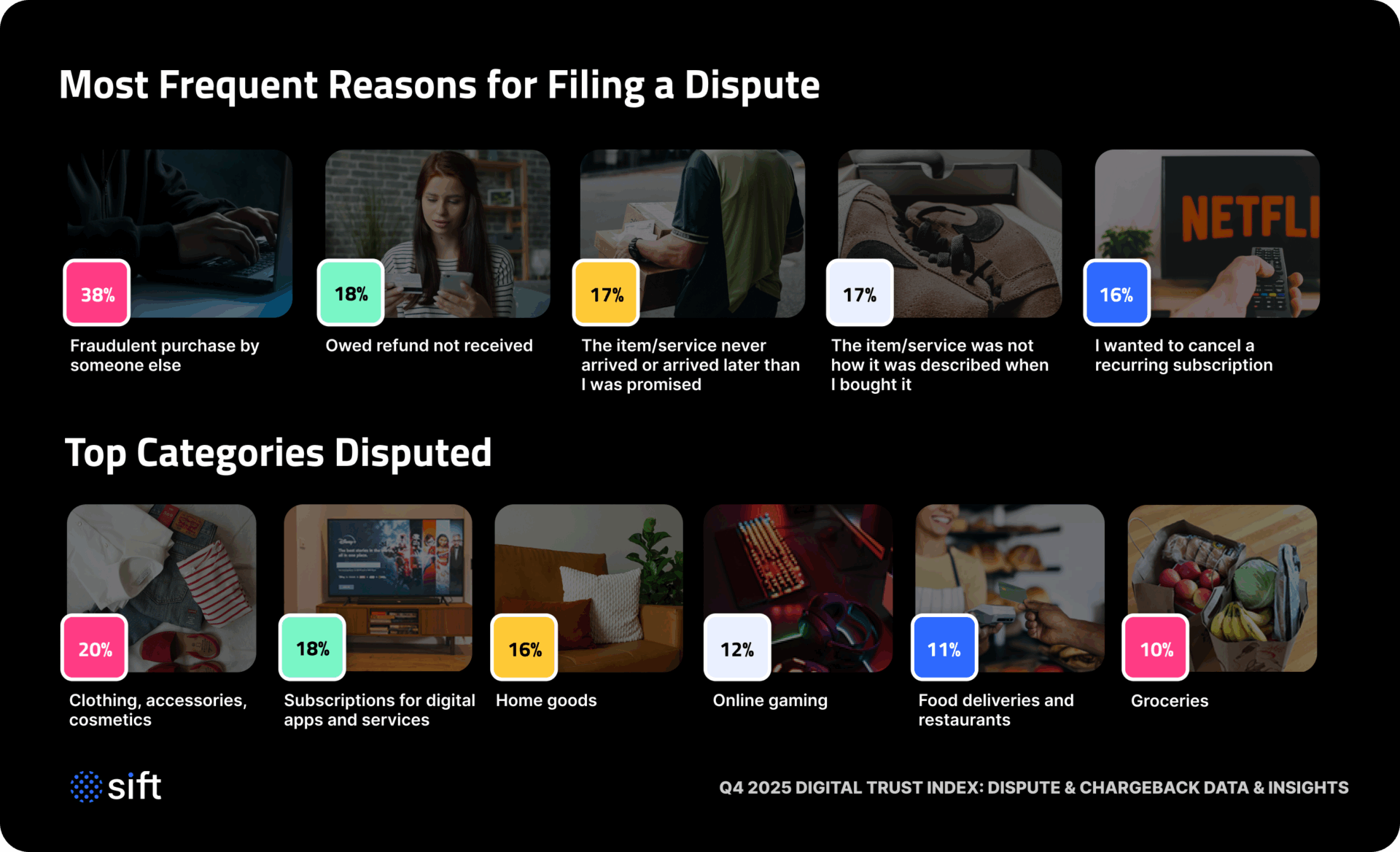
Fraudulent purchases remain the leading trigger of disputes. 38% of consumers cited unauthorized purchases as their reason for filing a dispute. However, a growing share of disputes now stem from operational and fulfillment frustrations—18% for delayed refunds and 17% for missing or late deliveries.

This expansion beyond traditional “fraud” disputes points to the evolving expectations of the digital shopper. Dispute behavior now mirrors the customer experience lifecycle itself, encompassing everything from delivery speed to product accuracy. Categories like clothing, digital app subscriptions, and home goods are among the most disputed.

Rising First-Party Fraud & Refund Schemes

First-party fraud is now the world’s most prevalent fraud type. It represents 36% of all reported fraud in 2024—up from just 15% a year earlier—on top of a $132 billion risk to e-commerce. One forecast projects a 40% rise in first-party fraud by 2026, with global chargeback volumes reaching 337 million transactions.

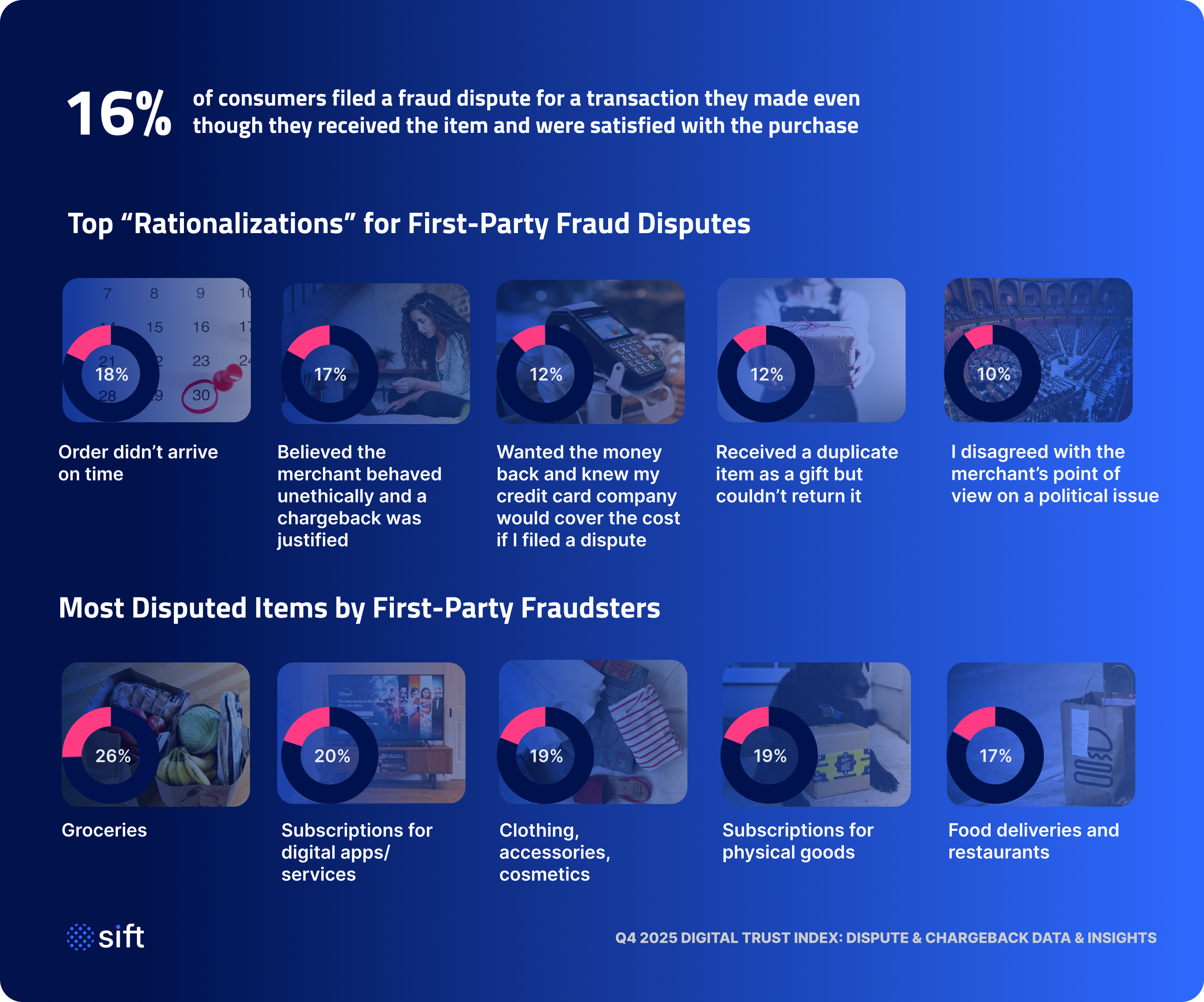
Sixteen percent of consumers admit to filing a false fraud claim (a form of first-party fraud) despite being satisfied with their purchase. Many now view chargebacks as a form of customer leverage rather than a fraud safeguard.

Their motivations are telling: delayed delivery (18%), perceived unethical merchant behavior (17%), and confidence that their card issuer would reverse the charge (12%) all ranked high. Groceries (26%) and digital subscriptions (20%) lead the list of categories tied to first-party misuse—areas characterized by convenience, frequency, and financial strain.

The “Refund Hack” Economy

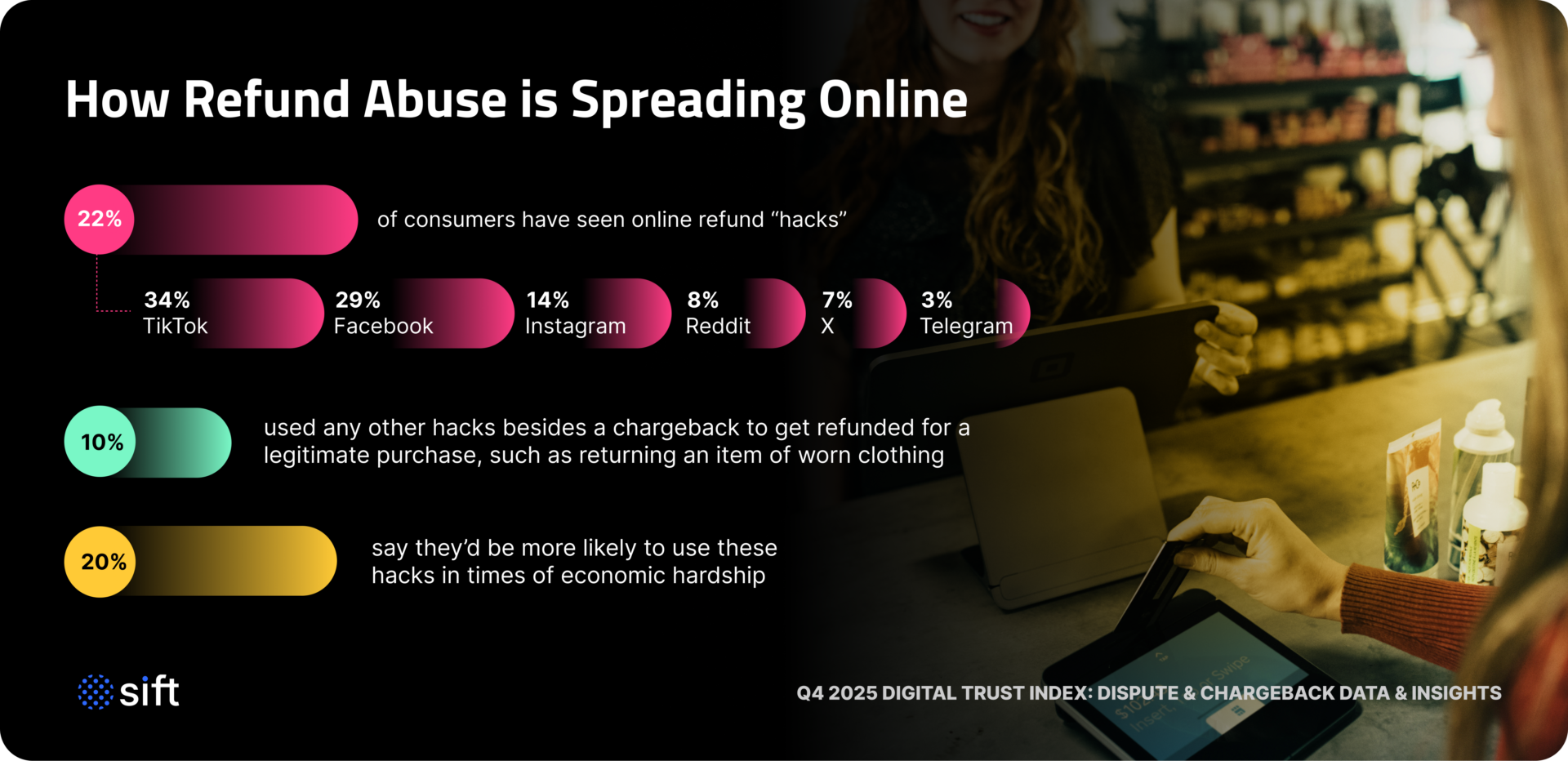
Economic pressure continues to influence consumer behavior, driving some to adopt unconventional methods to save money. The democratization of fraud has significantly lowered the barrier to entry, as social platforms and online communities make refund abuse tactics widely available. Creators share step-by-step “refund hacks” designed to dispute legitimate purchases or exploit return policies. Meanwhile, Fraud-as-a-Service (FaaS) offerings on the deep web and messaging apps like Telegram provide on-demand access to tools and tutorials, enabling refund manipulation at scale.

Sift’s survey shows that 22% of consumers have encountered online refund tutorials, mainly on TikTok (34%) and Facebook (29%), and 10% admit to trying these tactics themselves, such as returning worn items. One in five (20%) say they’d be more likely to use such methods during financial hardship—evidence that economic pressure, accessibility, and social influence are eroding the boundaries between legitimate consumer behavior and fraud.

refund-hack-economy

How Disputes Lead to Brand Abandonment

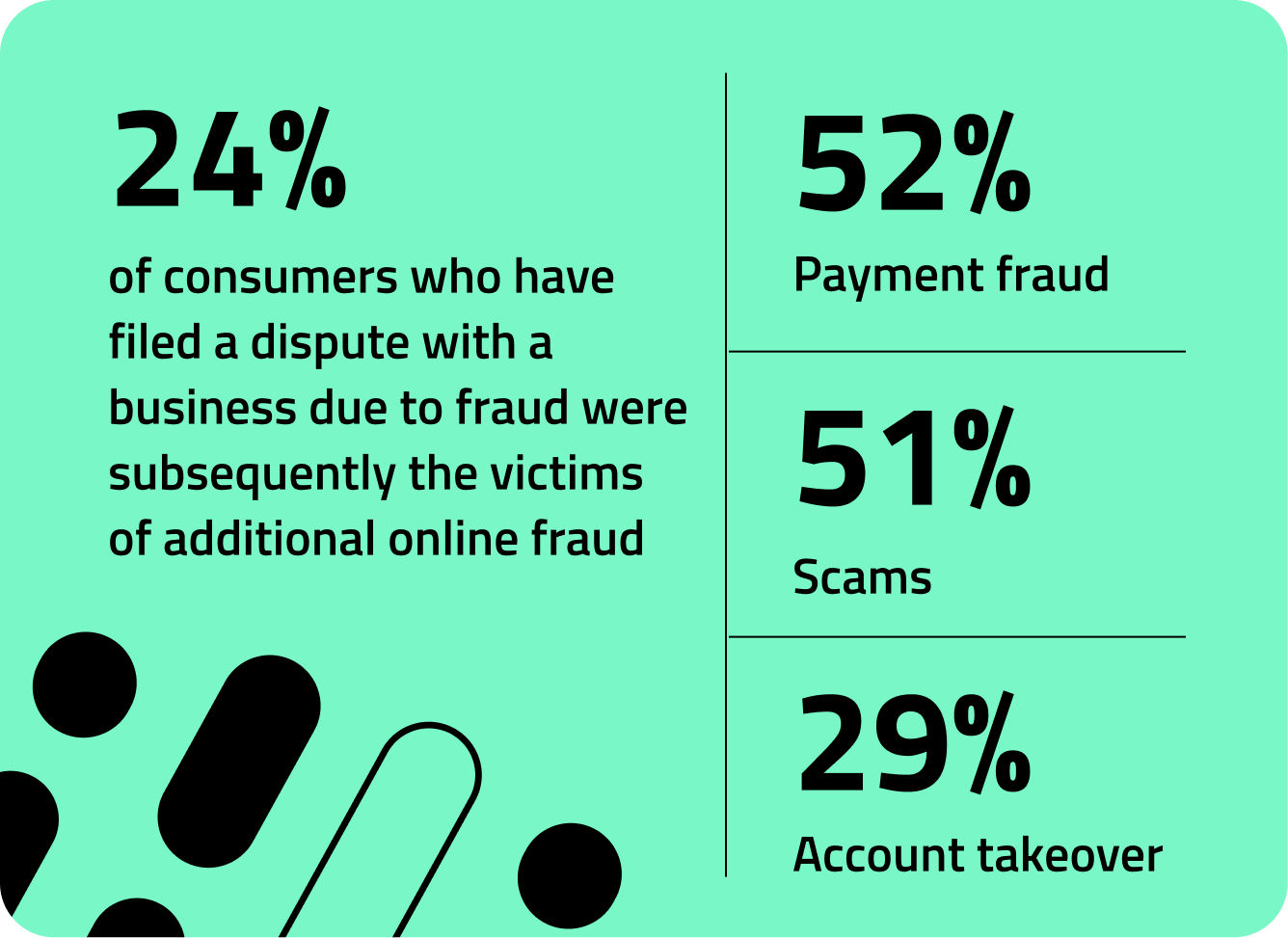
Disputes rarely end when a refund is issued. Nearly one in four consumers (24%) experienced additional online fraud after filing a dispute, indicating that the compromised payment methods weren’t shut down fast enough. The most common follow-on abuses, payment fraud (52%), scams (51%), and account takeover (29%), underscore how one dispute can cascade into wider digital vulnerability.

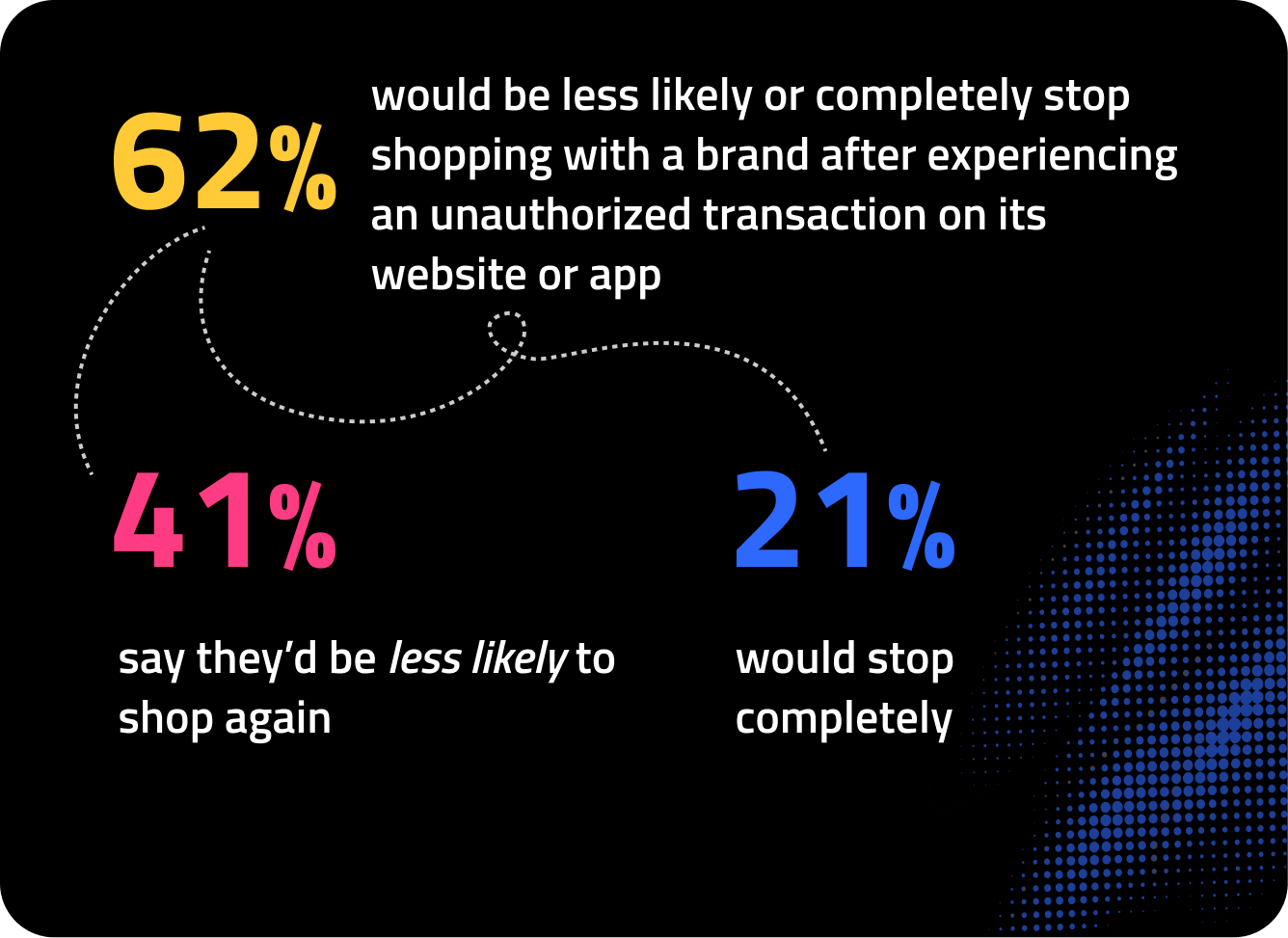
The reputational toll is equally severe. Sixty-two percent of consumers say they would be less likely or would stop entirely shopping with a brand after experiencing fraud. For merchants, every dispute now threatens far more than financial recovery. It puts hard-won customer acquisition investments at risk and undercuts long-term customer lifetime value. In a world where customer acquisition costs (CAC) continue to rise and loyalty is fragile, a single fraud event can have lasting downstream effects on retention and brand trust.

recurring-fraud-cases
fraud-breaks-customer-trust

Agentic AI and the Next Wave of Disputes

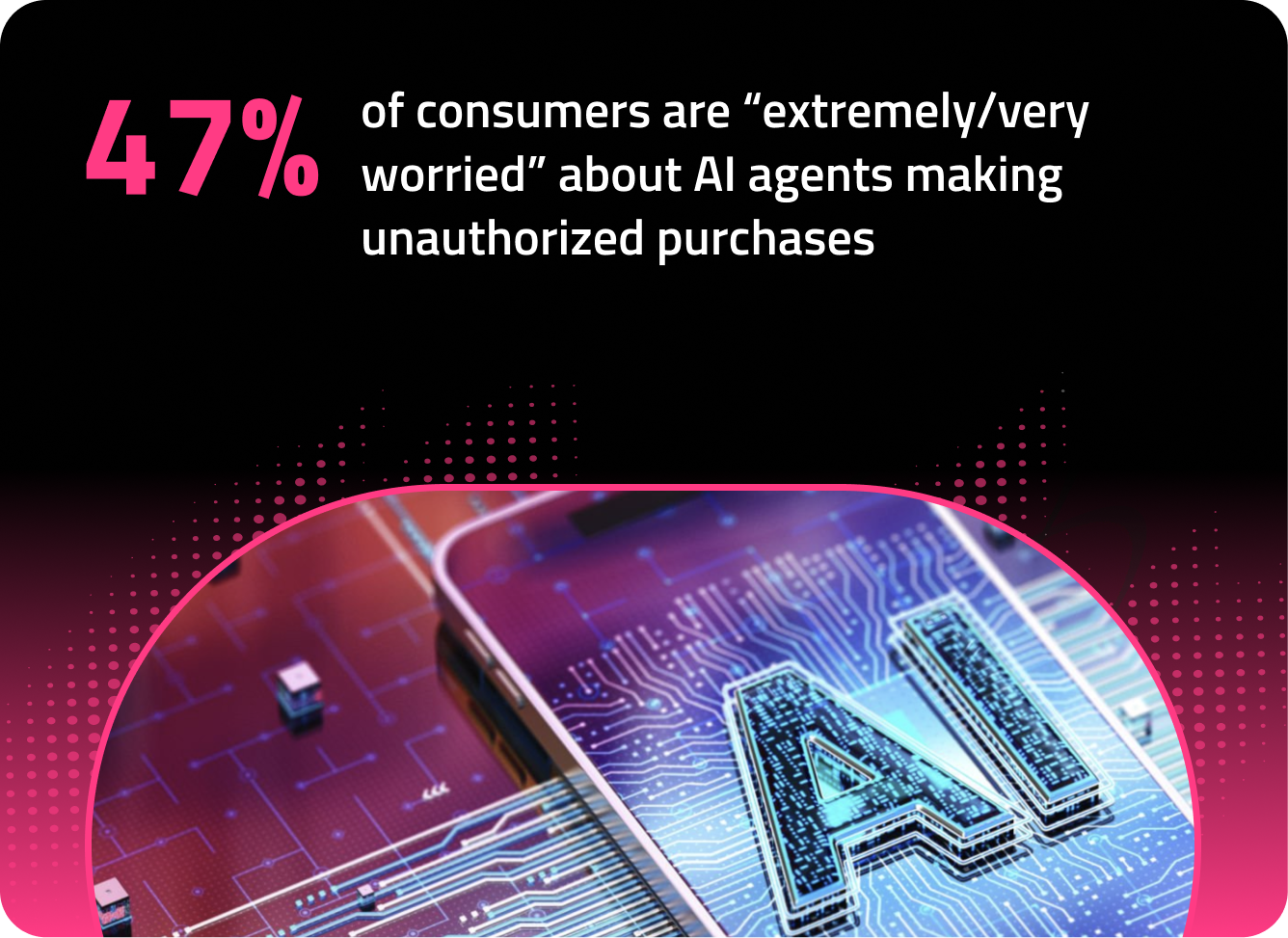
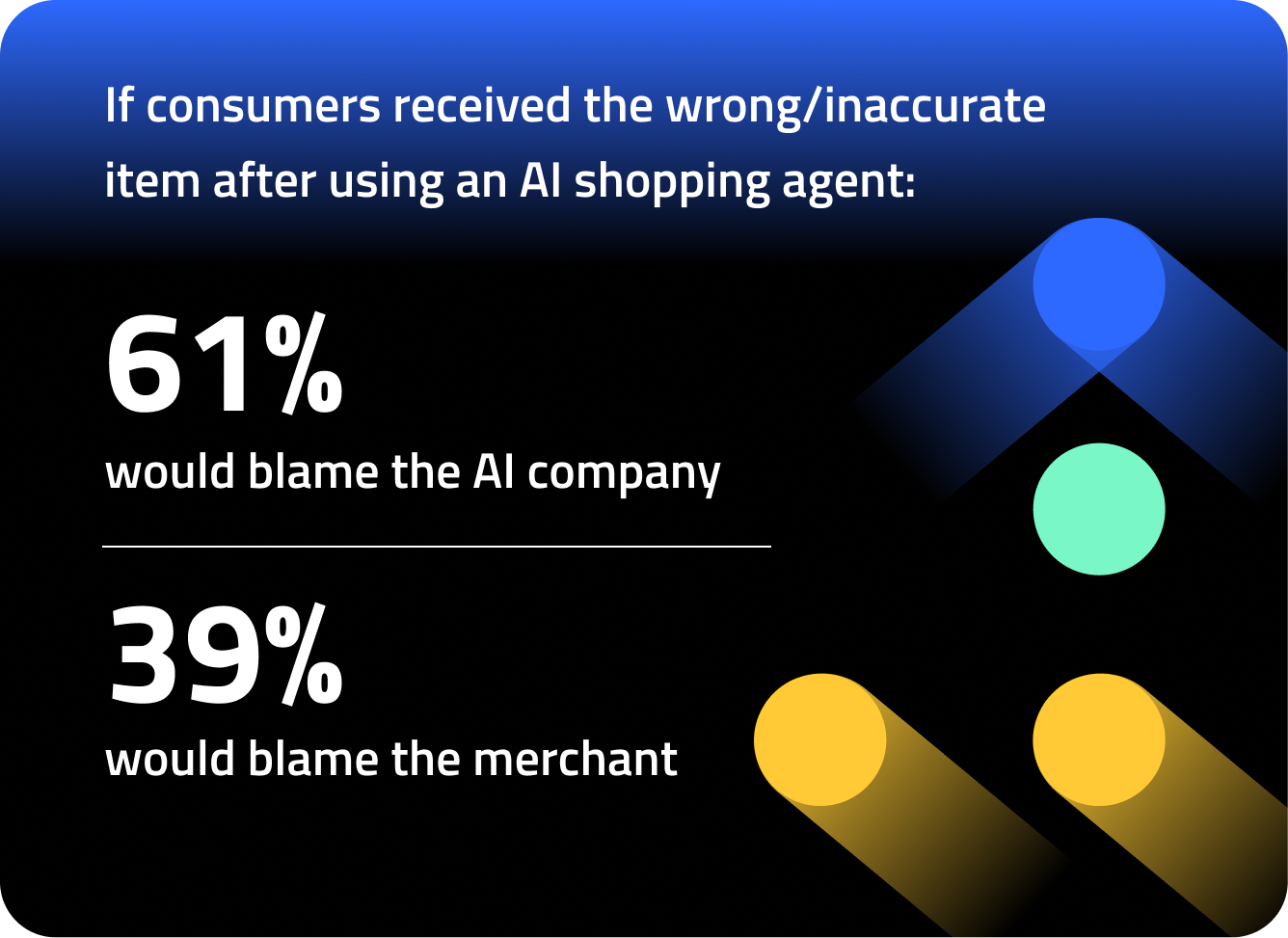
Agentic commerce, where AI agents independently research, compare, and complete purchases, is poised to reshape digital shopping and could unlock $3 to $5 trillion in global revenue by 2030. But this shift is already creating new trust gaps. Nearly half of consumers (47%) are worried about AI agents making unauthorized purchases, and when orders go wrong, accountability is unclear. Sixty-one percent would blame the AI company, while 39% would fault the merchant.

As automated purchasing grows, businesses should expect a temporary rise in disputes as consumers adjust and fraudsters test new vulnerabilities. Over time, stronger authorization standards and trusted agent protocols could reduce first-party fraud by clarifying intent and approval. For now, merchants, payment providers, and AI platforms share a common challenge: preventing misuse while helping consumers understand who, or what, is driving each purchase.

ai-purchase-anxiety
ai-delivery-mistakes
Quotation_mark

As disputes and chargebacks continue to rise, and first-party fraud becomes an increasingly significant part of overall dispute volume, businesses face growing operational and financial pressures. Leveraging proactive fraud prevention and streamlined dispute management helps companies reduce losses, protect revenue, and maintain long-term customer trust.

Alexander Hall

Trust and Safety Architect at Sift

Understanding Generational Differences in Consuler Disputes_IMG
background_blue_with_yellow_boreder

Understanding Generational Differences in Consumer Disputes

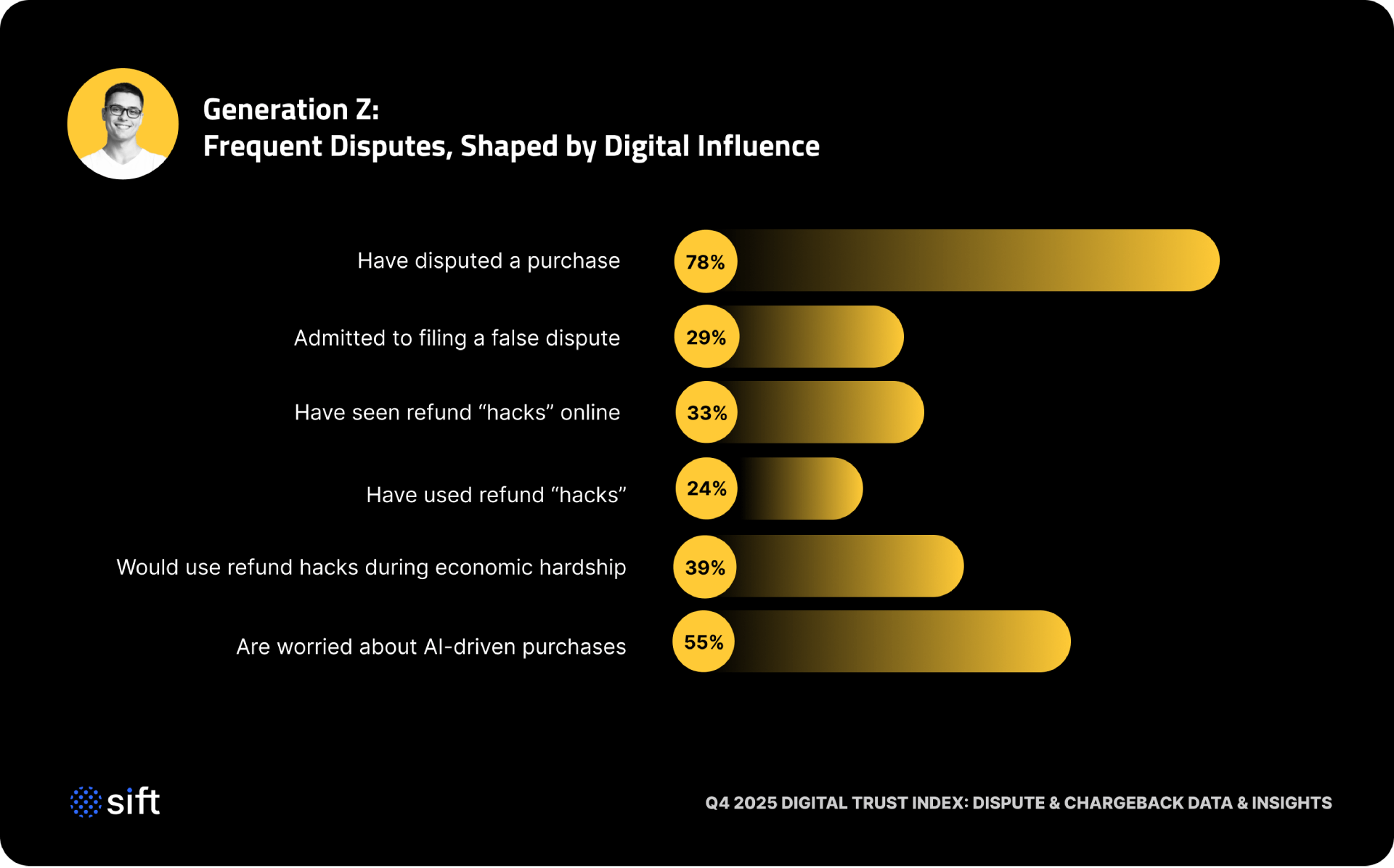
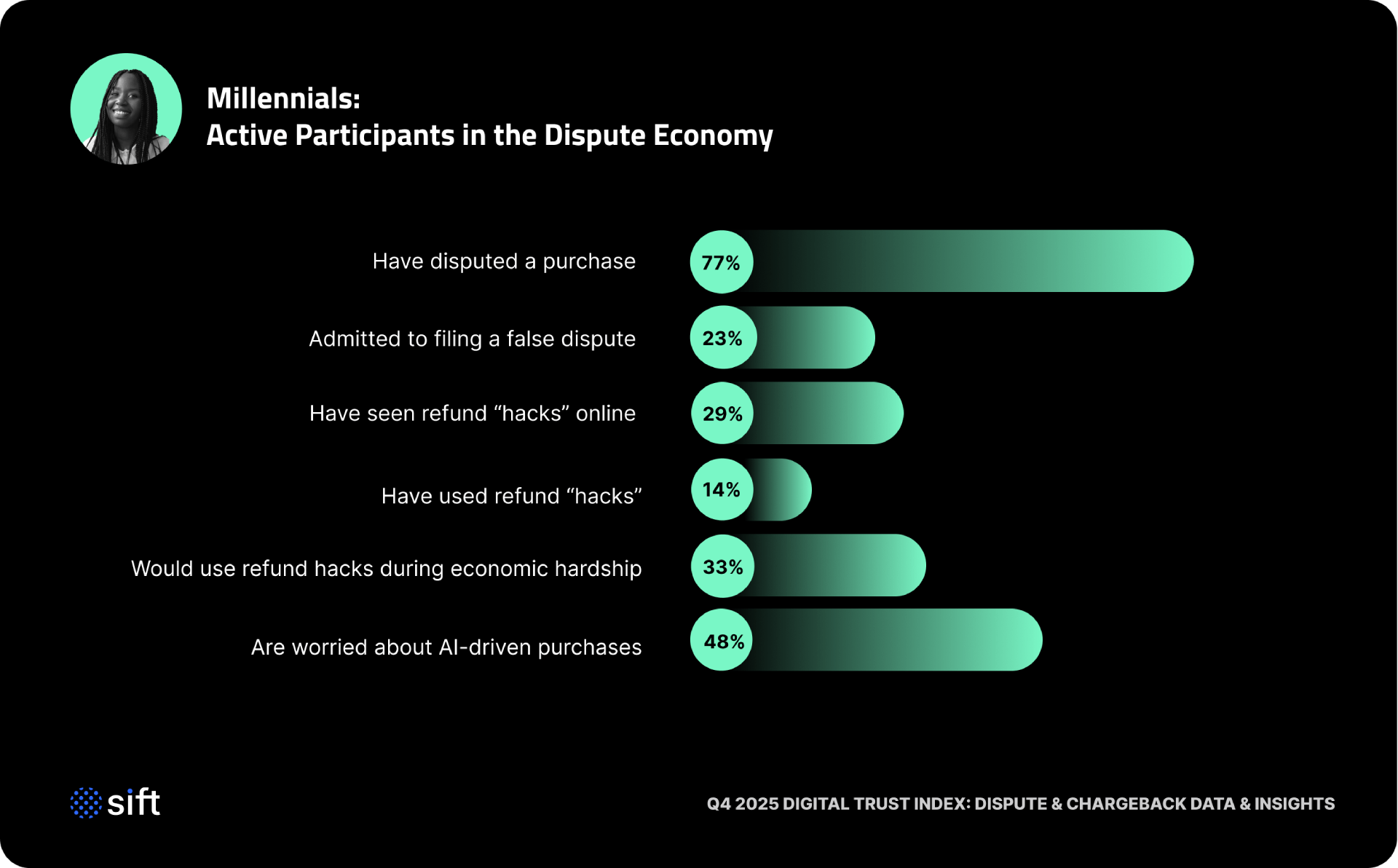
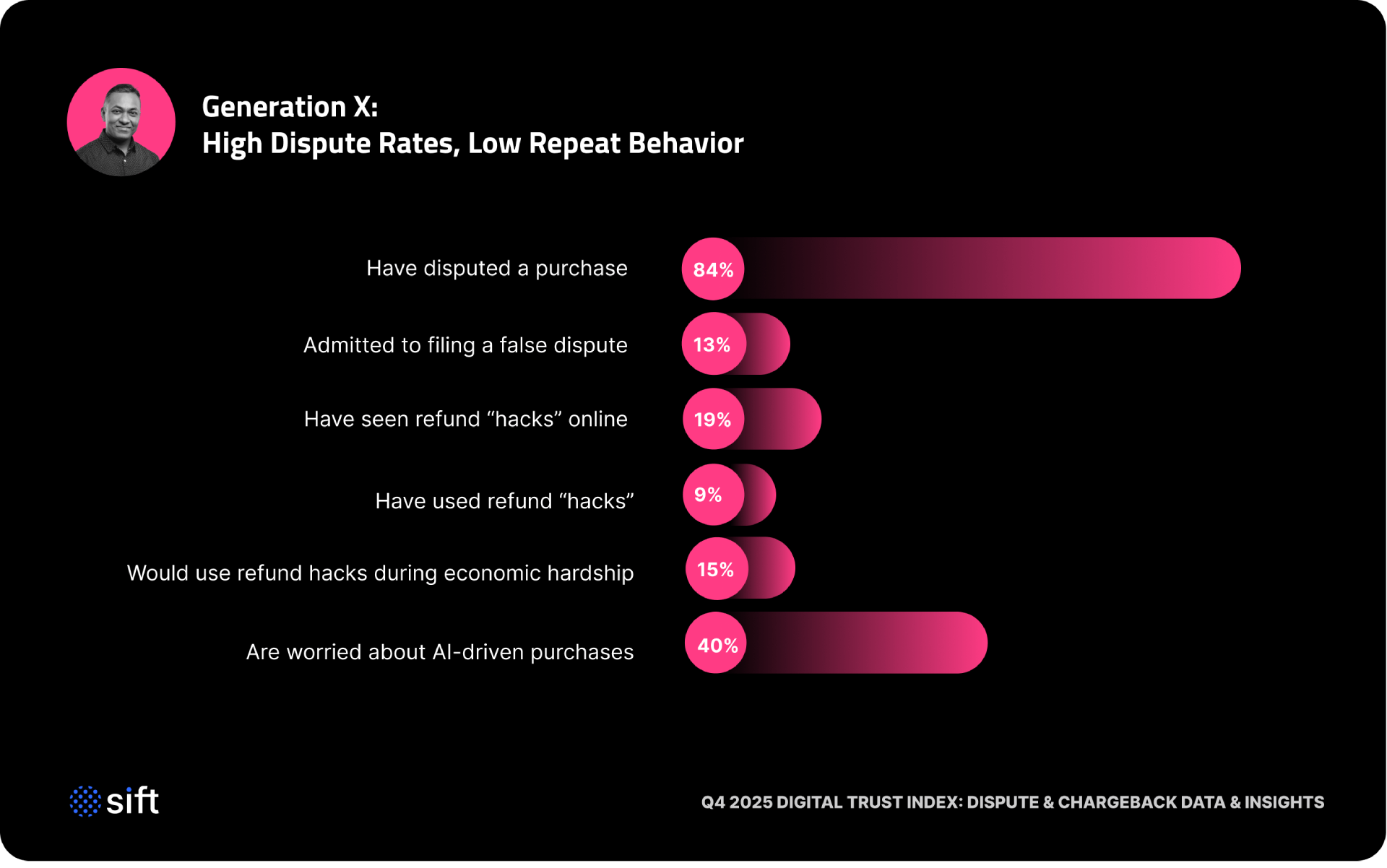
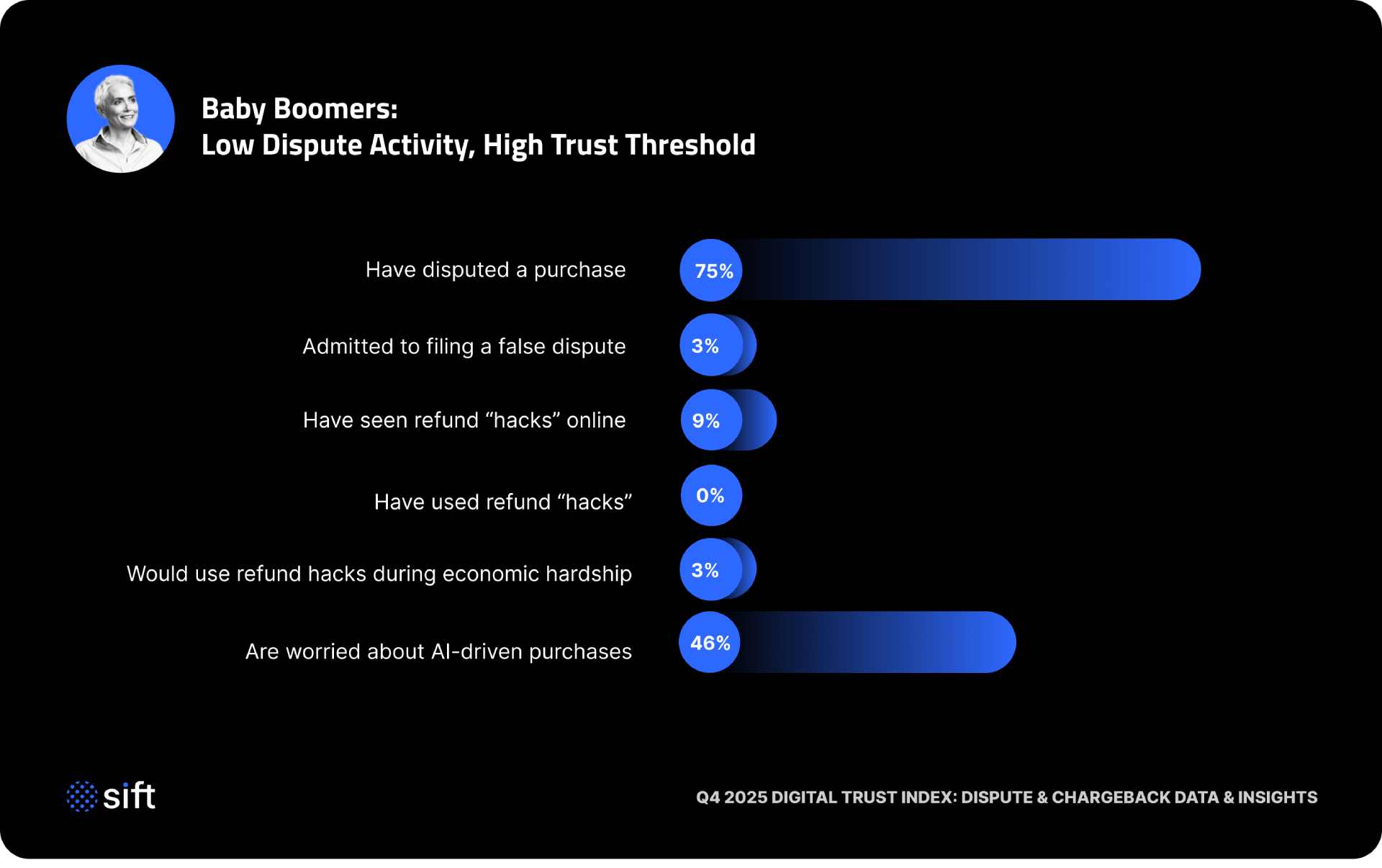
Dispute behavior doesn’t look the same across generations. Differences in digital fluency, economic pressure, and social influence shape how consumers engage with chargebacks. Younger generations, raised in an environment of instant refunds and frictionless payments, are both more likely to challenge transactions and more comfortable testing the boundaries of what counts as fraud. Older generations, meanwhile, remain cautious but less adaptable, with lower dispute volume and minimal exposure to emerging refund manipulation tactics.

While Gen X holds the highest overall dispute participation, Gen Z and Millennials are driving the surge in repeat disputes, false claims, and use of social “refund hacks.” Baby Boomers remain the least likely to dispute or misuse refunds, but their growing distrust of AI agents signals a new form of digital vulnerability.

generation-z-frequent-disputes-shaped-by-digital-influence
millennials-active-participants-in-the-dispute-economy
generation-x-high-dispute-rates-low-repeat-behavior
baby-boomers-low-dispute-activity-high-trust-threshold
mitigating-chargebacks-through-smarter-prevention
background_blue_with_yellow_boreder

Mitigating Chargebacks through smarter prevention

Businesses must understand the true cost and consequences of chargebacks. Excessively high chargeback rates typically triggers scrutiny from acquirers and card networks, potentially placing merchants into programs like Visa’s Acquirer Monitoring Program or Mastercard’s Excessive Chargeback Program, which carry higher fees and mandatory corrective actions. Under VAMP, the “excessive” threshold is set at 1.5% starting October 1, 2025, dropping to 0.9% on January 1, 2026, with a $10 fee per disputed transaction for merchants above the limit. Businesses must prevent fraud pre-transaction to manage VAMP, using tools like RDR, CE 3.0, or CDRN, improving policies, and changing acquirers if ratios remain high.

Sift’s award-winning platform provides real-time transaction analysis, identifies potential fraud, and automates dispute management, helping businesses prioritize winnable cases, reduce financial losses, and protect revenue. By combining comprehensive fraud prevention with efficient dispute handling, companies can stay ahead of evolving fraud tactics while maintaining a secure, seamless customer experience.

*On behalf of Sift, Researchscape International polled 1,075 adults (aged 18+) across the United States via online survey in October 2025.

Discover More from Sift

drive-forward-with-fibr

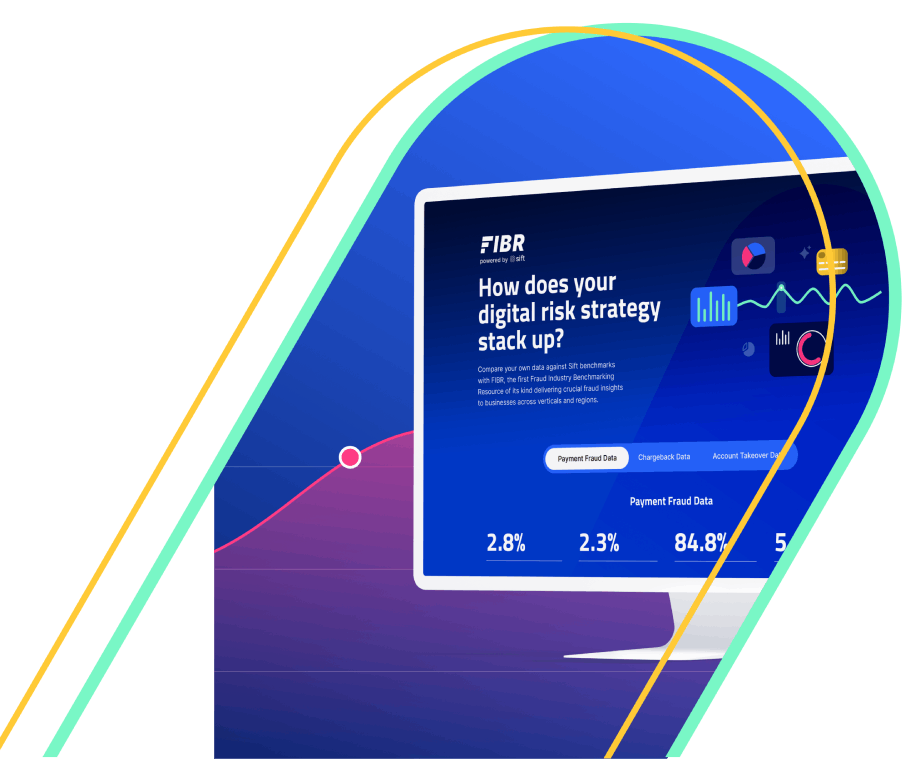
Drive Your Business Forward with FIBR

Stop fraud losses fast, create exceptional user experiences, and scale securely with Sift’s tried-and-trusted platform.

Discover Data